
AI Won’t Replace Your Team But Teams Using AI Will Work Differently
AI is not walking through the door with a set of keys and taking over the business. The more realistic shift is quieter: the same team starts making decisions faster, preparing work with less friction, and spending fewer hours on tasks that never needed a human touch in the first place.
That change matters.
For business owners, the question is no longer whether AI is “coming”. It is already sitting inside tools many teams use every day, from email and spreadsheets to rostering systems, accounting software, customer service platforms, and document apps. The real question is how work changes when people know how to use it well.
AI will not make good judgement, trust, service, leadership, or accountability obsolete. It will change how teams organise their time, share knowledge, and turn ideas into finished work.

AI changes tasks before it changes jobs
Most workplace fears about AI start with the biggest question: “Will this replace people?”
In most small and medium businesses, that is the wrong starting point. AI usually affects tasks, not whole roles.
A bookkeeper still needs to understand the business, check assumptions, deal with exceptions, and explain what the numbers mean. But AI may help categorise transactions, draft basic reports, or find anomalies faster.
A customer service worker still needs patience, context, and empathy. But AI may draft a first response, summarise a long customer history, or suggest the next best step.
A manager still needs to set priorities and make hard calls. But AI may turn rough notes into a plan, compare options, or prepare a first version of a policy.
The job remains, but the shape of the day changes.
This is where many businesses get the biggest early gain from AI for teams. The benefit is not replacing people. It is removing small points of friction that slow people down.
Common examples include:
Turning meeting notes into task lists
Drafting standard emails and messages
Summarising long documents
Creating first drafts of procedures
Checking text for clarity
Sorting customer enquiries by topic
Helping staff prepare training material
Creating simple formulas or spreadsheet explanations
None of these tasks remove the need for human review. They do reduce the amount of blank-page work people face each day.
Teams using AI becomes more like an editor than a typist
One of the biggest changes AI brings is the move from creating everything from scratch to reviewing, steering, and improving first drafts.
That sounds small, but it changes the rhythm of work.
Before AI, a staff member might spend 45 minutes writing a customer update from a blank screen. With AI, they might create a rough version in two minutes, then spend 15 minutes making it accurate, warmer, and more useful.
The second version still needs human skill. In fact, it often demands more judgement.
A person needs to ask:
Is this true?
Does this sound like us?
Is anything missing?
Could a customer misread this?
Does this create risk?
Is this too vague?
What should happen next?
That is why AI does not remove the need for capable people. It raises the value of people who can think clearly, check details, and communicate well.
The strongest teams will not be the ones that let AI produce work unchecked. They will be the ones that build the habit of treating AI output as a draft, not a decision.
Work gets faster, but expectations also rise
When a task becomes easier, the expected standard often rises.
This has happened before. Spreadsheets did not remove accountants. They changed what people expected from financial information. Email did not remove communication skills. It increased the amount of communication people handled each day.
AI may do the same.
If a staff member can prepare a clear customer response in half the time, customers may expect faster replies. If a manager can produce a draft process more quickly, the team may expect clearer instructions. If a salesperson can research an account faster, generic pitches become harder to justify.
This is where businesses need to be careful. Speed alone is not the goal.
Fast poor work is still poor work. A rushed AI-generated email with the wrong details can damage trust faster than a late but accurate reply.
The better aim is shorter time to useful work.
That means:
Faster drafts
Better preparation
Fewer repeated explanations
Clearer internal notes
More time spent checking and improving
Less time lost to admin drag
The best use of AI is not to make everyone busier. It is to help the team spend more of the day on work that needs care, judgement, and context.

Managers need to redesign the way work flows
AI adoption often fails when a business treats it like a software rollout only. Someone signs up for a tool, sends a link to the team, and hopes productivity improves.
That rarely works.
The bigger question is how work should move through the business now that some parts can happen faster.
For example, imagine a team that handles quote requests. Before AI, the process might look like this:
Before AI | With AI support |
Read the customer enquiry | Summarise the enquiry and identify missing details |
Search past quotes manually | Pull examples from approved templates or records |
Write a quote from scratch | Draft a quote using current pricing rules |
Ask a manager to review everything | Ask a manager to review exceptions and final wording |
Send the quote | Send the quote with a clear follow-up task |
The human is still accountable. The manager still checks the work. The customer still receives a response from the business, not from a machine acting on its own.
But the pressure points change. The bottleneck may no longer be drafting. It may become review, approval, data quality, or unclear pricing rules.
That is why business owners should avoid asking only, “Which AI tool should we buy?”
Better questions include:
Which tasks slow the team down every week?
Which repeated tasks follow a clear pattern?
Where do errors usually happen?
Which decisions need human approval every time?
What information should AI never guess?
Who checks the final output?
What does “good” look like for this task?
AI exposes weak processes. If a business has messy data, unclear responsibilities, or inconsistent rules, AI may make those problems more visible.
That can be useful, as long as the business treats it as a signal to improve the way work is done.
New skills matter more than new job titles
AI will create some new specialist roles, especially in larger organisations. But most businesses will not need a full team of AI experts. They will need existing staff to build a few practical skills.
The first skill is asking better questions. AI tools respond to instructions, context, and examples. A vague request creates a vague answer. A clear request gets closer to useful work.
For example, “Write a customer email” is weak.
A better instruction would include:
Who the customer is
What happened
The tone needed
The outcome required
Any limits or rules
What format the answer should follow
The second skill is checking. Staff need to know that AI can sound confident and still be wrong. It may invent details, miss context, or produce text that seems polished but does not fit the situation.
The third skill is knowing when not to use it. Some matters need privacy, sensitivity, or direct human judgement. Complex complaints, legal issues, staff performance matters, and high-risk financial decisions should never be handed over casually.
The fourth skill is improving repeat work. If a team uses AI for the same task each week, they can build a better prompt, template, checklist, or review step. That turns one person’s experiment into a team practice.
For business owners exploring AI for businesses, this is often the most practical path: start with common tasks, train people to use AI responsibly, and build shared habits before chasing advanced tools.
Team culture will decide whether AI helps or creates friction
AI can create tension if people believe it is being introduced to monitor them, replace them, or squeeze more work out of them.
That fear is not irrational. Many workers have seen new technology arrive with big promises, then turn into extra pressure.
Leaders need to be direct about why AI is being used and what will change.
A useful message sounds like this:
We are using AI to reduce repetitive work, improve consistency, and give people better starting points. People are still responsible for checking work, making decisions, and serving customers well.
That kind of clarity matters.
Teams also need permission to talk about mistakes. AI use will involve trial and error. Some prompts will fail. Some outputs will be odd. Some use cases will look helpful at first, then prove too risky or too slow.
A healthy culture makes room for these lessons without blame.
It also sets boundaries. Staff should know what information they can enter into AI tools, which tools are approved, and when a human must review the result.
Without clear rules, people will make their own. Some will avoid AI completely. Others will paste sensitive information into tools without thinking through the risk.
Neither outcome is ideal.
Start small and build rules as you learn
The best first AI projects are usually boring. That is a good thing.
Boring tasks are often repeated, easy to check, and low risk. They give the team room to learn without putting customers, staff, or compliance at risk.
Good starting points include:
Drafting internal procedure notes
Summarising non-sensitive documents
Rewriting technical text in plain English
Preparing training quizzes from approved material
Creating checklists from existing processes
Drafting first responses for common enquiries
Turning rough notes into structured updates
Poor starting points include:
Sensitive HR matters
Final legal wording
Complex financial advice
Customer complaints with high emotion
Anything involving confidential data without proper controls
Decisions that affect someone’s employment, access, pricing, or rights
A simple pilot can work well.
Choose one task. Choose one approved tool. Choose a small group of people. Define what success looks like. Run it for a few weeks. Review the results.
Measure practical things:
Did the task take less time?
Did quality improve?
Did errors reduce?
Did people use it willingly?
Did customers notice a benefit?
Did the review step catch problems?
Did the process feel easier or more confusing?
If the answer is positive, document the method and expand carefully. If not, adjust or stop.
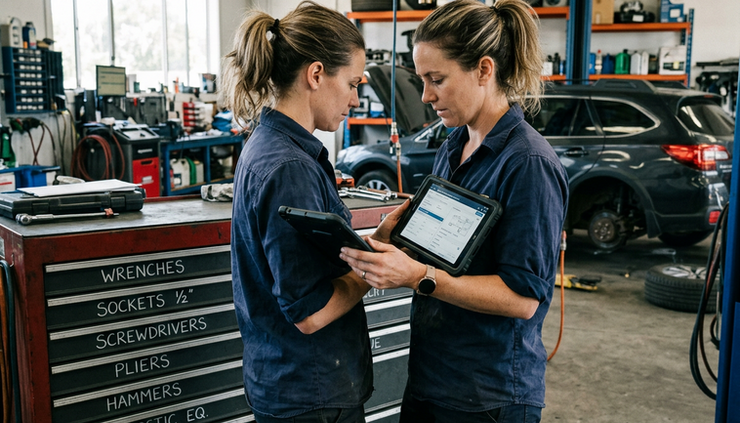
Human judgement becomes the real advantage
As AI tools become easier to access, simply using them will not set a business apart for long. Many competitors will have access to similar tools.
The difference will come from the judgement around the tool.
That includes knowing the customer, understanding the market, protecting trust, and making good calls when the answer is not obvious.
AI can help draft a refund response. It cannot decide what kind of business reputation is worth building.
AI can summarise sales notes. It cannot replace the trust built through consistent service.
AI can organise a policy document. It cannot lead a team through change with patience and honesty.
This is the main point many business owners should hold onto: AI makes human judgement more visible. When basic production becomes easier, the quality of decisions, relationships, and standards matters more.
The team does not become less important. The team’s attention moves to higher-value work.
FAQ
Will AI replace staff in small businesses?
In most cases, AI is more likely to change tasks than remove whole roles. It can help with drafts, summaries, sorting, and routine admin. People still need to check work, make decisions, handle exceptions, and build customer trust.
What is the safest way to introduce AI to a team?
Start with low-risk, repeated tasks that are easy to review. Set clear rules on approved tools, privacy, and human checking. Avoid sensitive data and high-stakes decisions until the business has proper controls in place.
How can a business know if AI is actually helping?
Track simple outcomes. Look at time saved, error rates, staff feedback, customer response times, and quality of work. If AI makes a process faster but less accurate, the process needs to change.
Do staff need technical skills to use AI well?
Most staff do not need to code. They do need to give clear instructions, provide context, check outputs, and understand limits. These are communication and judgement skills more than technical skills.
What should never be left entirely to AI?
AI should not make final decisions on legal, financial, employment, safety, or sensitive customer matters without qualified human review. It should support those processes, not own them.

The takeaway is simple
AI will not replace the value of a capable team. It will change where that value shows up.
Less time may go into first drafts, repeated admin, and searching for information. More time will go into checking, improving, deciding, and serving customers well.
The businesses that benefit most will not be the ones that rush to automate everything. They will be the ones that choose practical use cases, set clear rules, train people properly, and keep humans accountable for the final result.
AI changes the work. Good teams still make the difference.
Ready to Make AI Work for Your Business?
AI can help businesses work faster, but the right people are still at the heart of every successful operation. The key is finding the right balance between technology and human expertise—using AI to reduce repetitive work while giving your team more time to focus on customers, decisions, and growth.
At Tallant Asia, we help businesses build reliable, skilled teams that support day-to-day operations and adapt to the changing demands of modern work. Whether you need administrative support, customer service, technical expertise, or additional capacity for your growing business, outsourcing can help you work smarter without compromising the human touch.
Ready to strengthen your team and explore what outsourcing can do for your business? Talk to Tallant Asia today and take the next step toward a more efficient, scalable operation.



Comments